
Short answerThe code itself can’t track you. Scanning only reads text on your phone. If the code holds a link and you open it, the site behind the link can see what any website sees: the time, your approximate location from your internet address, and your phone and browser type. A dynamic code adds one stop, the short-link service, which counts the scan the same way.
What the code itself can and can’t do
The pattern stores a short piece of text: a link, a Wi-Fi password, a phone number. Your camera reads it on the phone and shows what it found. Nothing is sent when you scan. How the pattern works is in what is a QR code?
So a code that holds text, a contact card or Wi-Fi details reveals nothing about you to anyone. Only a code that opens a web address can lead to tracking, and only once you open it.
What a scan can reveal when it opens a link
| Information | Can the site see it? |
|---|---|
| The date and time | Yes |
| Approximate location (country, region, city) | Yes, worked out from your internet address. Not your exact address or GPS position. |
| Phone type, system and browser | Yes, from what every browser sends |
| Which printed code you scanned | Yes, if the business gave each poster or table its own code or link |
| Your name, phone number or email | No, unless you type them into a form or you’re signed in to that site |
| Your exact GPS location | No, unless the page asks and you allow it |
| Your photos, contacts or other apps | No |
This is the same as clicking a link in an email. The QR code just saves typing the address.
Static and dynamic codes
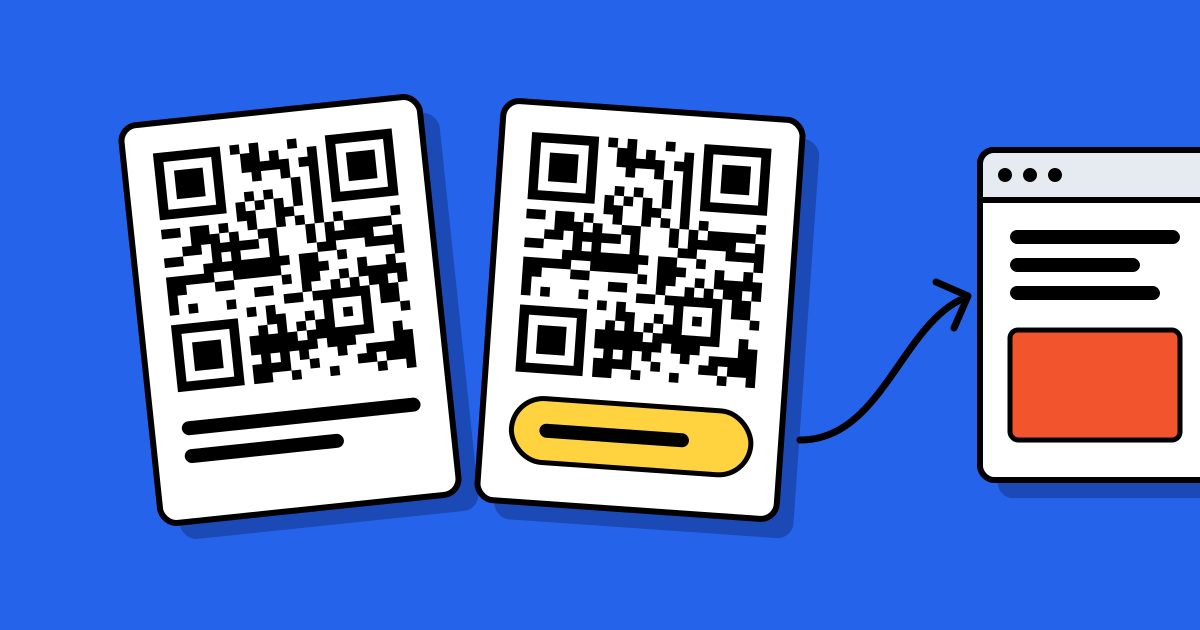
A static code holds the destination itself, so the scan goes straight to that site. The generator that made it never hears about the scan.
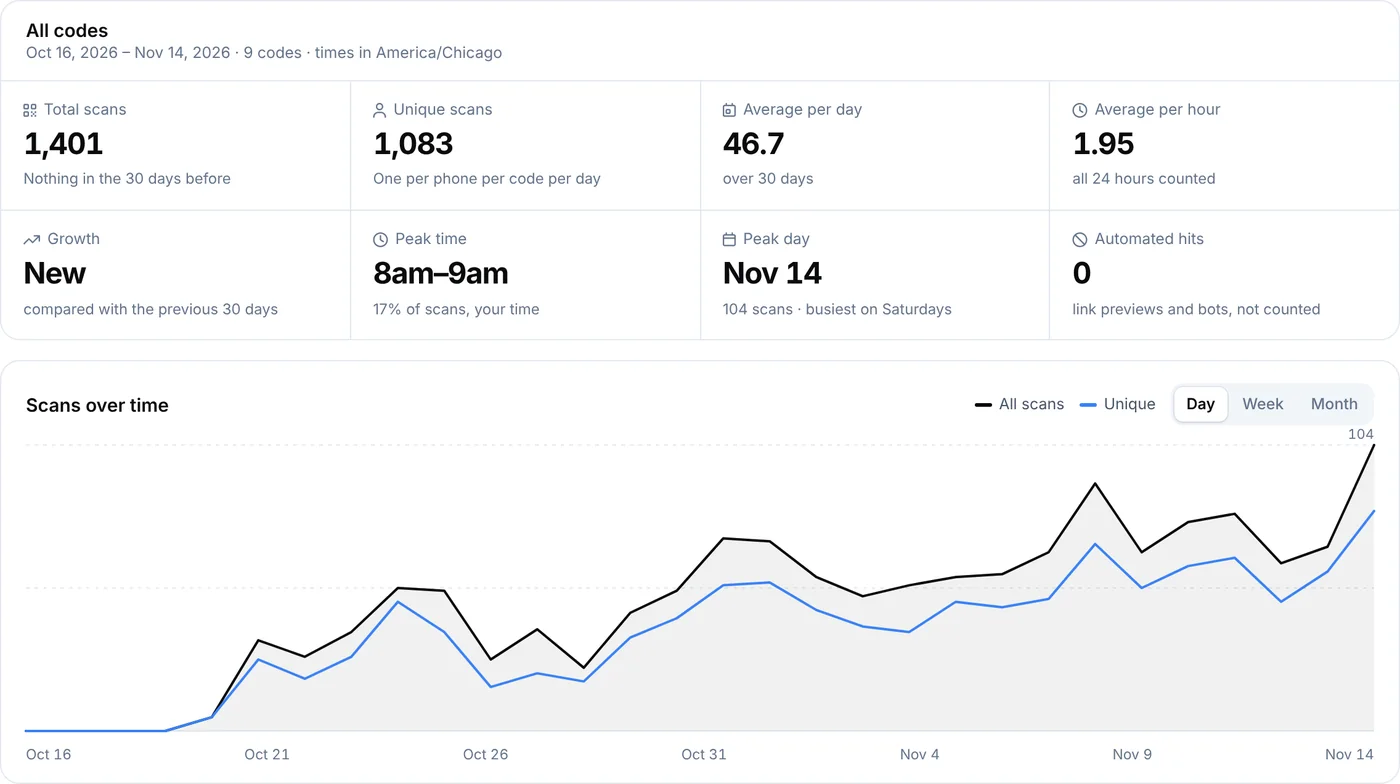
A dynamic code holds a short link. The scan passes through the short-link service first, which counts it and sends you on. That is how businesses see how many people scanned a flyer. Services differ in what they keep: QR Code Planet keeps totals by time, place and device, doesn’t store scanners’ internet addresses, and counts unique scans with a fingerprint that changes daily and is deleted after two days. The full comparison is in static vs dynamic QR codes.
Advertising pixels
Some codes load an advertising tag, such as a Meta or Google pixel, so the business can show you ads later. That works like the same tag on any website: if you’re signed in to that ad network in your browser, it can link the visit to your account there. On QR Code Planet, these retargeting pixels are a Pro feature, and the business can turn on a prompt that asks before any tag loads.
How to check a code before you open it
- Read the preview. Phone cameras show the address before opening it. Check that the domain is the one you expect.
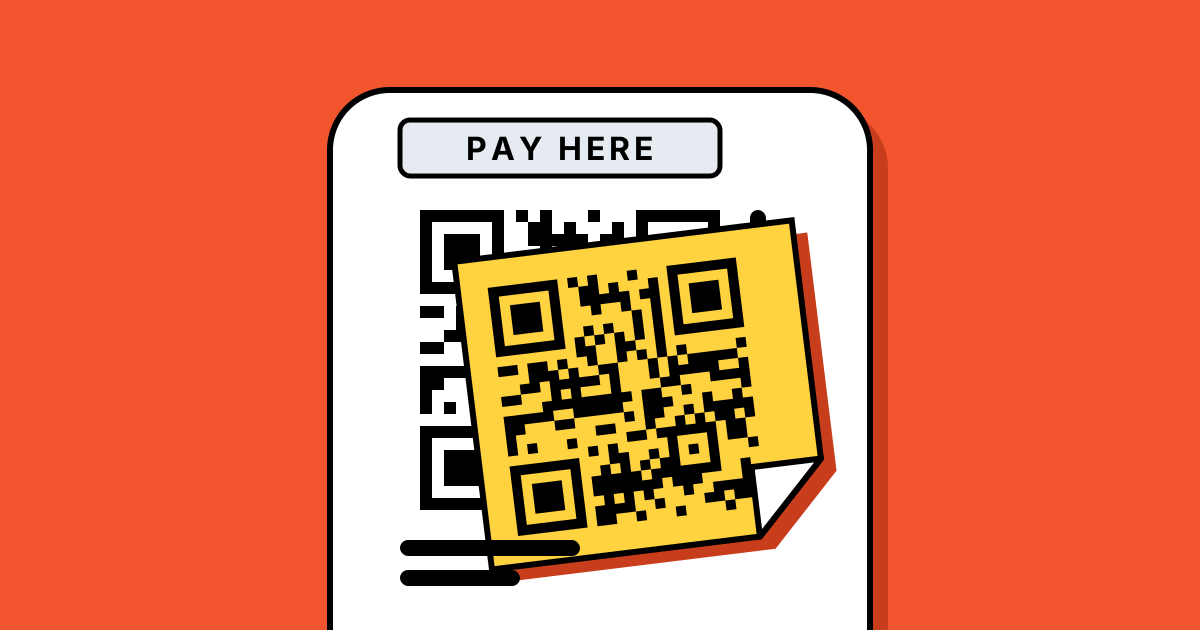
- Be careful with stickers. A code stuck over another code, on a parking meter or payment panel, is a common scam. More in are QR codes safe?
- Don’t sign in from a scan. If a page you reached by QR code asks for a password or card details, go to the site yourself instead.
- Use private browsing. Opening the link in a private window keeps it separate from your signed-in accounts.
FAQ
Questions people ask
Can’t find yours? A person answers every email within 2 working days.
Email usCan a QR code get my location?
Not by itself. A site opened from a code can estimate your city from your internet address, like any website. Your exact GPS location is shared only if the page asks and you allow it.
Can a QR code get my phone number?
No. A site can’t see your number. A code can open a text message or a call, but nothing is sent until you press send or call.
Do static QR codes track scans?
No. A static code sends you straight to its destination, so the generator never sees the scan. The destination website can still count visits like any site.
Can a business see who scanned its QR code?
It sees counts by time, place and device, not names. It learns who you are only if you fill in a form or sign in.