
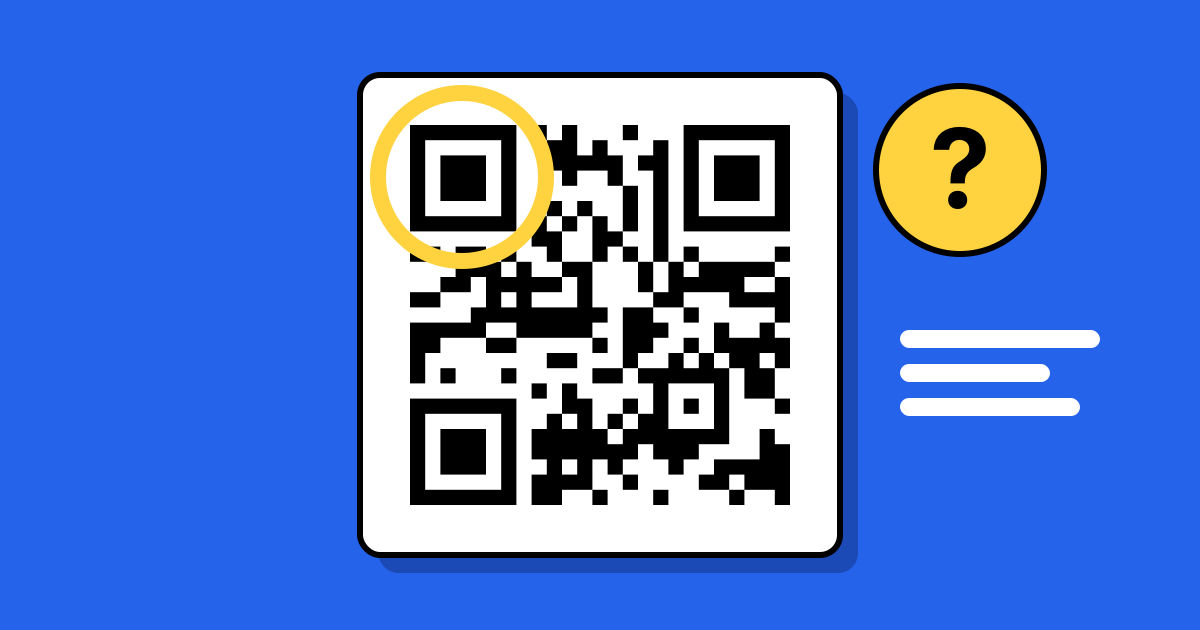
Short answerA QR code is a two-dimensional barcode: a square grid of dark and light squares that stores text, most often a web address. A phone camera finds the three large corner squares, reads the grid, and turns it back into the text. QR stands for Quick Response. The format was invented in 1994 by DENSO WAVE in Japan.
What the pattern is made of
Every small square in a QR code is called a module. A dark module is a 1 and a light one is a 0. Some modules carry your data; the rest help the camera find and read the code.
- Three corner squares. The large squares in three corners are finder patterns. They tell the camera that this is a QR code, where its edges are and which way up it is. That is why a code scans from any angle.
- A smaller square near the fourth corner. An alignment pattern lets the camera correct for a code that is tilted or printed on a curve. The smallest codes don’t have one; large ones have several.
- Dotted lines between the corners. Timing patterns, alternating dark and light, show the camera how big one module is.
- Format strips beside the corners. These say how the rest of the code is encoded, so the reader knows how to unpack it.
- Data and error correction. Everything else. Part of it is your content, and part is spare information that lets the reader rebuild what dirt or damage has hidden.
- The quiet zone. The empty margin around the code. It separates the code from whatever is printed near it, and a code with no margin often fails to scan.
What happens when you scan one
- The camera spots the three corner squares and works out the code’s position and angle.
- It measures the grid and reads each module as dark or light.
- It uses the error-correction data to fix modules it read wrongly.
- It turns the result back into text and decides what kind of content it is.
- For a web address, the phone shows the link for you to tap. It doesn’t open anything until you do.
Reading the code needs no internet connection, because the content is in the pattern. Opening the web page it points to does. Step-by-step help for different phones is in how to scan a QR code.
How much a QR code can hold
QR codes come in 40 sizes, called versions. Version 1 is a grid of 21 by 21 modules; version 40 is 177 by 177. The largest can hold about 7,000 digits or about 4,300 letters and numbers.
In practice, less is better. The more a code holds, the smaller its squares become at the same printed size, and the harder it is to scan. A short web address makes a code with large, easy squares. That is one reason long content, such as a menu or a PDF, is put on a web page and the code holds only the link.
What a QR code can do
A code only stores text. What happens next depends on how that text is written, and phones recognise several formats:
- A web address opens a page.
- Wi-Fi details offer to join the network.
- A contact card offers to save a name, phone number and email.
- A phone number, text message or email opens ready to send.
- Plain text is shown on screen.
The full list, with what each is good for, is in QR code types.
Static and dynamic codes
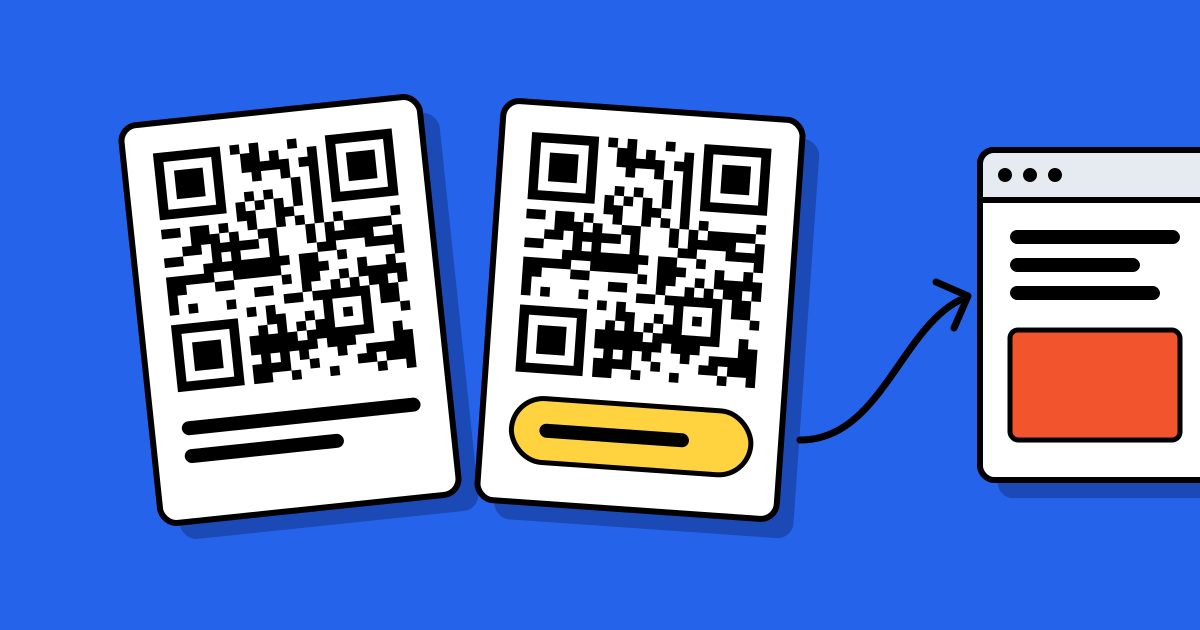
A static code holds the final content itself. It can’t be changed after it is made, and it works for as long as the content does. A dynamic code holds a short link that passes the scanner on to a destination you can change later, and it can count scans. The differences are set out in static vs dynamic QR codes.
Why a damaged code still scans
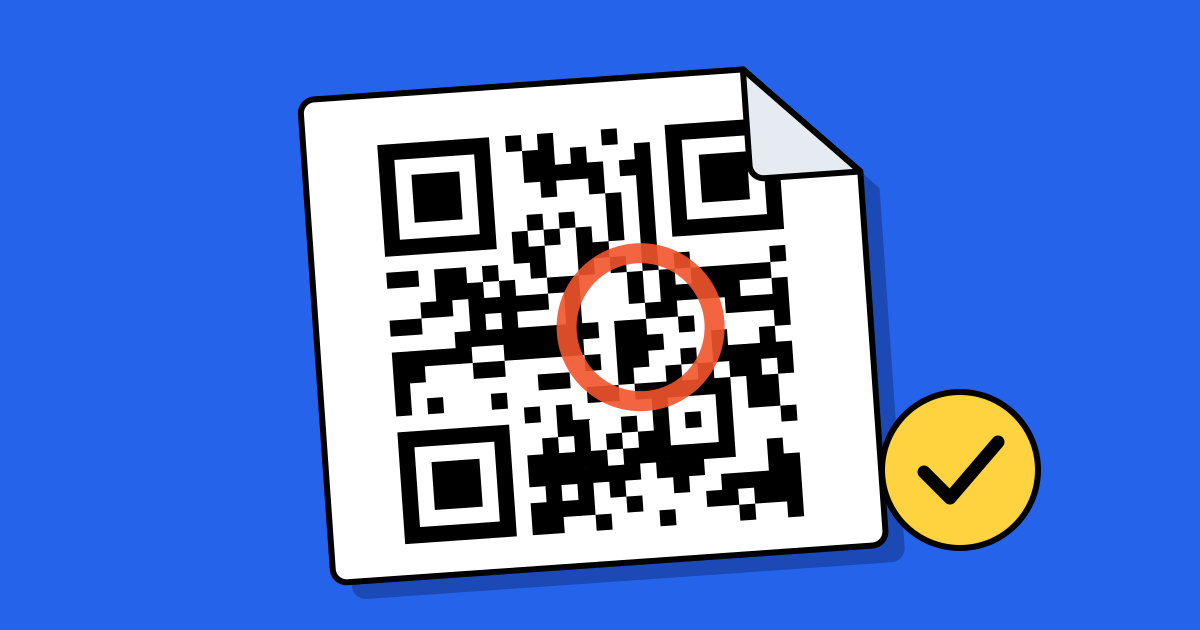
The spare information in every code lets a reader rebuild missing parts. Depending on the level chosen when the code is made, between about 7% and 30% of it can be hidden or damaged and it will still read. This is also what makes a logo in the middle possible. More on this is in QR code error correction.
Where QR codes came from
DENSO WAVE, a Japanese company, created the QR code in 1994 to track car parts on production lines, where ordinary barcodes held too little and scanned too slowly. The company holds the patents but chose not to enforce them on codes that follow the standard, so anyone can make and use QR codes without a licence. “QR Code” is a registered trademark of DENSO WAVE. How QR codes differ from the striped kind is covered in QR code vs barcode.
FAQ
Questions people ask
Can’t find yours? A person answers every email within 2 working days.
Email usWhat does QR stand for?
Quick Response. The format was designed to be read quickly, from any direction.
Do QR codes need the internet?
Reading a code doesn’t. Opening a web page the code links to does. A Wi-Fi or contact code works with no connection at all.
Is it free to make a QR code?
Yes. The format needs no licence, and a static code costs nothing to keep. In our generator, static codes are free on the Free plan, 10 a month.
Can two QR codes look the same?
Only if they hold the same content with the same settings. Change one character and the pattern changes.
Do QR codes run out?
No. The number of possible patterns is far larger than anyone could use.